
Schools generally provide a list of school supplies according to the child’s grade level.
At the beginning or middle of each school year, parents or caregivers often despair over the school supply list of items their children need to purchase at school. This is when the struggle to find quality products at an affordable price begins, right? So, we’ve put together some tips to help you in this endeavor.
Schools generally provide a list of school supplies according to the child’s grade level, which helps parents and caregivers get a good understanding of the items needed for their child’s good performance in the classroom. However, there are other factors parents or guardians should consider, such as quality, cost-effectiveness, payment methods, personal taste, and other factors that can also be taken into consideration when making a purchase.
Early Childhood Education vs. High School: Which Type of Supplies to Choose?
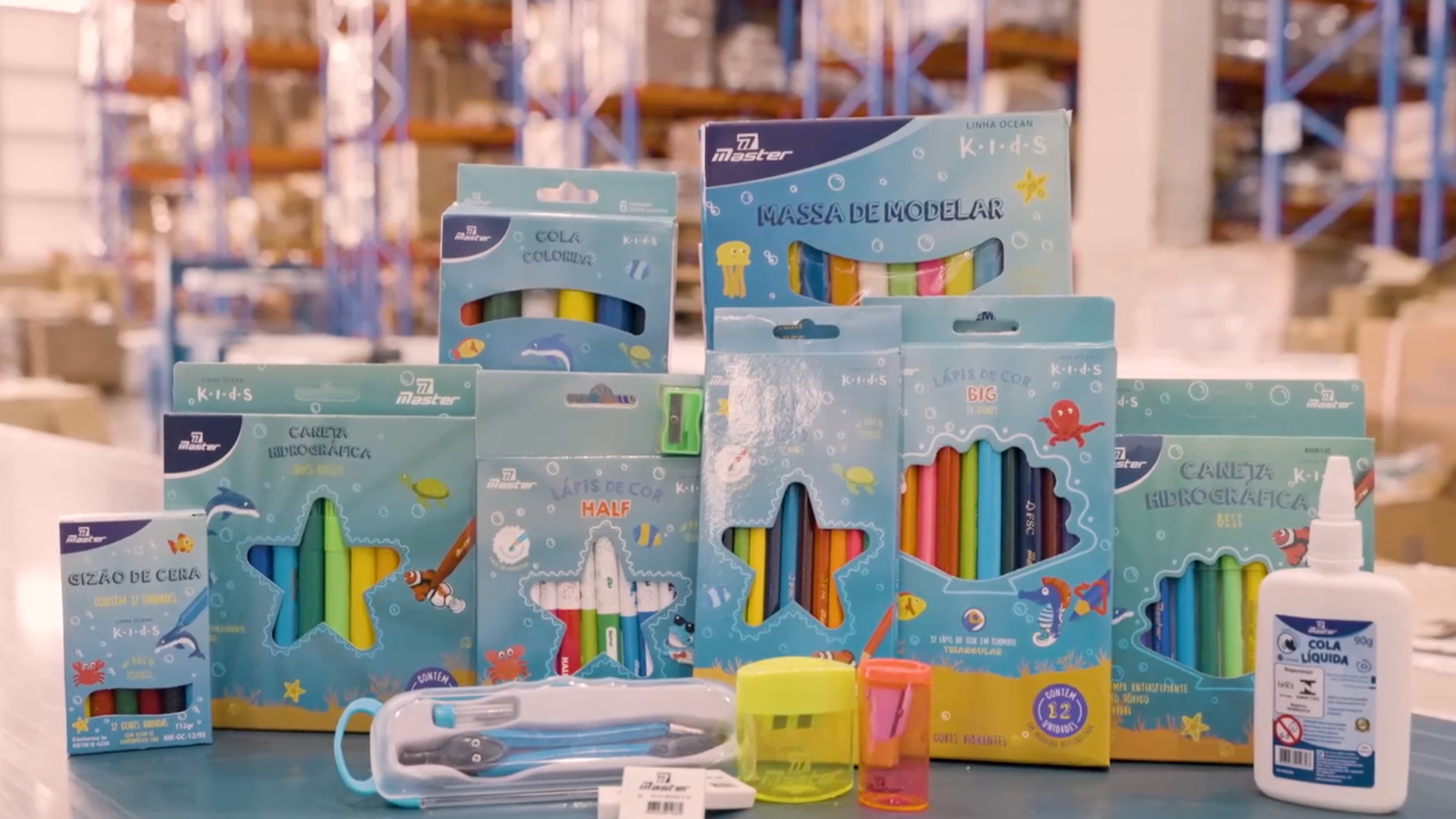
The main difference in the use of school supplies at each educational stage is that in Early Childhood Education, activities are more focused on creativity, socialization, and improving children’s motor coordination through activities involving crafts, such as painting, drawing, and modeling with clay.
In High School, the focus is on absorbing as much information as possible, and most students tend to write down a large portion of the content written on the board by their teachers. This means that the use of pencils, erasers, pens, and notebooks is much higher. Some common items for early childhood education include:
Pencils
Erasers
Crayons
Colored pencils
Paper paper
Modeling clay
Blunt scissors
Sketchbook
White glue or glue stick
Head markers
In the later years of school, such as high school and university, new demands arise and tastes also change significantly. In addition to some of the familiar items on the supply list, such as pencils and erasers, mechanical pencils and ballpoint pens also become commonplace, as well as university-style notebooks or even binders with pads of paper specifically for this purpose.
With the transition from elementary to high school and the increase in the number of subjects and teachers, students often face a very common question at this age: should they use a notebook for each subject or a single one for all? When buying school supplies, teenagers tend to impose their preferences and actively participate in choosing items that interest them, going beyond the list provided by the educational institution.
At this stage, students increasingly dedicate themselves to preparing for the university entrance exam with specific subjects, such as applied mathematics, Portuguese and writing, history, and other areas of the humanities and sciences. They need to dedicate more time to their studies and take notes much more carefully, as this knowledge will be assessed on tests administered by teachers.
Tips to avoid mistakes when buying school supplies:
When buying school supplies for your children, the first tip is to organize yourself both financially and emotionally for the day of the supply purchase and plan as early as possible to avoid lines and crowds.
Generally, the best times to buy school supplies for the following semester are in June, and for the following year, in November or February, after the end-of-year and Carnival festivities. Check out some tips below to avoid mistakes when shopping:
– Keep an eye on promotions and new arrivals
– Do your research thoroughly and avoid impulse buying
– Make two lists: one for the school and one specifically for the school
– Talk to your child and buy according to their style
It’s important to be careful when trying to get ahead of yourself and end up basing your purchase on someone you know who’s been through the same stage your child is currently in, or even older siblings, as lists often vary greatly from year to year and from institution to institution. This way, you can avoid unnecessary expenses.